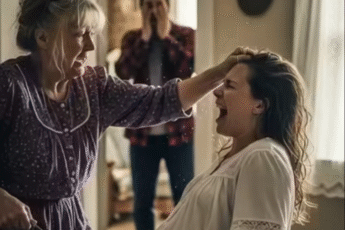
My parents smashed my face while I slept — just so I’d look ugly at my sister’s wedding. Then they raised their glasses, clinked them together, and laughed. Dad sneered, “Finally, she looks like what she’s worth.” Their laughter echoed through the house that night. But what they didn’t know was that their toast… marked the beginning of my revenge.

The night before my sister’s wedding, I went to bed in the guest room with a full heart and a half-finished card for her sitting on the nightstand. I’d spent the last two weeks helping organize everything—the catering, the seating chart, even sewing a last-minute hem on her rehearsal dress. I hadn’t been invited to give a toast, but I told myself it didn’t matter. I was just happy to be there, to be part of it.
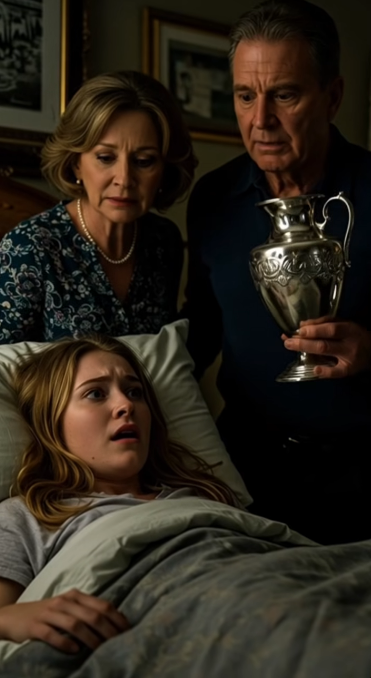
Around three in the morning, I woke up gasping. There was a sharp, burning pressure across my cheekbone, then my mouth. Something wet and hot, followed by the metallic taste of blood. I sat up, disoriented and dizzy, and that’s when I saw them. My parents, standing over me, with my sister’s silver centerpiece vase in Dad’s hand.
My mother, Eleanor, didn’t even flinch. “Serves you right for trying to upstage your sister,” she hissed, her voice a venomous whisper. “Let’s see them take pictures of this face tomorrow.”
“What? What are you talking about?” I choked out, the words thick and clumsy in my mouth.
My father, Richard, laughed—a low, cruel sound. “You should have stayed invisible. But no, you had to wear makeup. You had to stand too close to the groom’s mother. You’re nothing. You’re the backdrop.”
I tried to stand, my vision blurring from the pain. My lip was split, my eye swelling fast.
“Stay down,” Mom said coldly. “You already ruined the dress rehearsal just by being there. Tomorrow’s her big day, not yours.”
I stared at them, my mind struggling to connect these monsters to the people who raised me, who held my hand during thunderstorms and told me bedtime stories. They looked at each other, then raised their champagne glasses, leftovers from the rehearsal dinner.
“To peace and perfection,” Dad toasted, his voice dripping with satisfaction. “One less distraction.” They clinked their glasses, the sound echoing in the silent room.
I crawled into the bathroom and locked the door. My hands shook as I turned on the light. The reflection in the mirror made me scream internally, a raw, silent sound that ripped through me. My cheek was a deep, swelling plum color. A jagged gash ran just above my eyebrow, and blood dripped from my swollen lips. I looked like I’d been in a car crash. I couldn’t tell anyone. Not yet. Not in that house. I curled up on the cold bathroom floor, holding a towel to my face, and I didn’t cry. Not a single tear. That scared me more than the injury. I felt nothing. Just a profound, terrifying cold.
In the morning, my sister, Amelia, banged on the door. “You better not make a scene! Don’t you dare ruin this!”
Mom’s voice joined hers, sharp and impatient. “You either come out and put on that dull gray dress we picked for you, or you leave.”
Quietly, I opened the door. They all recoiled.
“Oh my god,” Amelia muttered, her hand flying to her mouth. “You look… Jesus. What did you do to yourself?”
Before I could answer, Mom snapped, “She probably fell. She’s clumsy. Always has been.” Then she turned to me, her eyes like chips of ice, and whispered low, “And no one will believe you over us.” She pushed a thick concealer stick into my palm like a threat.
An hour later, I stood at the back of the church, my face so bruised and patched up with makeup I looked like a ghost. Guests turned to look, some with concern, some with confused pity. Not one person asked if I was okay. They just stared, then looked away.
During the vows, Mom leaned over and whispered, “Smile. At least pretend to be useful.”
Dad chuckled beside her. “She’s lucky we even let her attend.”
That was the moment something inside me cracked. Not broke. Cracked—sharp, thin, and precise, like the tip of a scalpel. They thought I’d stay small. That I’d slink away, forget, and disappear into the background they had so carefully constructed for me. But I was done being their backdrop, and in that cold, silent moment, I already knew exactly what I would do.

The next morning, sunlight streamed through the thin curtains of the hotel room they’d booked for me, each ray feeling like a knife slicing through my skull. Every pulse in my face throbbed in time with my heartbeat. Downstairs, in the presidential suite where my family was gathered, laughter floated up—the kind of forced, performative laughter that pretends nothing happened, that insists on perfection.
“Big day today!” my father’s booming voice announced from the hallway as I passed their open door. “Our perfect daughter’s wedding. Nothing can ruin it.”
My mother chimed in, her voice dripping with self-satisfaction, “I made sure of that.” My sister’s giggle followed, airy and carefree.
I sat there in the silence of my own room, frozen. The anger didn’t come in a single wave. It built in quiet, suffocating layers: shock, then confusion, then a bone-deep disbelief, until finally, something colder and harder than rage settled in.
When I went downstairs for the pre-wedding breakfast, Mom looked up and gave a rehearsed gasp, loud enough for the catering staff to hear. “Jessica, what happened to your face? You should have been more careful walking in the dark last night.”
Dad sipped his coffee, not even looking at me. “Maybe clumsiness runs in the family,” he muttered, his eyes sparkling with a cruel, mocking amusement he shared with my sister.
I wanted to scream the truth. I wanted to pull the now-dented silver vase out of the trash where I knew they’d hidden it and shove it into the middle of the breakfast table. I wanted to shout, “This is what you did to me! This is who you are!” But I didn’t. They had spent my entire life turning me into a liar by their disbelief. No one ever believed the invisible daughter.
At the wedding venue, my sister, glowing in her thousand-dollar designer gown, walked down the aisle arm-in-arm with the same man who had nearly broken my nose with a piece of table decor just twelve hours ago. After the ceremony, her new husband, Mark, lifted his glass to my parents. “You’ve raised the most beautiful, perfect woman I’ve ever met.”
Everyone clapped. My father raised his glass, too, and his eyes found mine across the room. “To family,” he said with a smirk that was just for me. “Even the ones who try their best not to ruin the photos.” The crowd, oblivious, laughed politely.
Mom leaned toward a group of her friends, her voice a stage whisper loud enough for me to hear. “She used to be so pretty before she let herself go. Always trying to steal her sister’s spotlight, even now.”
That’s when my phone buzzed. A message from my coworker, Sarah, the only person who had ever listened, who had ever truly believed me. You okay? Saw the rehearsal photos. You looked… tired.
I typed back, my fingers moving with a new, strange certainty. Not really, but soon.
For the rest of the reception, I walked through the crowd like a ghost, but this time, I wasn’t invisible. I was an archivist of my own pain, collecting memories. I memorized every cruel sentence, every mocking smile, every dismissive glance. An idea began to form—slow, sharp, and deliberate. Not revenge through chaos, but revenge through their most prized possession: their image. They cared about appearances more than life itself. Their pride wasn’t love; it was currency. They lived for the fantasy of their perfect family, their perfect lives. So I decided to take it from them.
After the reception, while the happy couple was making their rounds, I slipped into the bride’s suite. Amelia’s phone lay unlocked on the vanity. One tap, and I found everything: her message threads with friends ridiculing Mark’s family, his bachelor party photos that were far from innocent, and the not-so-professional texts between her and the wedding planner, complaining about my “dour presence.”
Next, I found my father’s jacket slung over a chair. His phone was in the inside pocket. Inside were hundreds of messages detailing his hidden business deals—the ones that skirted the law—and the fake charitable donations he used for tax write-offs. And finally, I accessed Mom’s tablet. In a private email folder innocently named “Helping Hands,” I found a trove of emails to distant relatives and old family friends, asking for money for her “struggling daughter, Jessica,” complete with an old, sad-looking photo of me attached. She’d been collecting money in my name for years while calling me useless to my face.
By the time the wedding wound down, I had everything I needed. The evidence was saved, a silent arsenal on a tiny USB drive in my pocket.
That night, back at their house, they toasted again in the living room, drunk on champagne and self-congratulation. Dad raised his glass in my direction. “You can smile now, sweetheart. It’s all over. You survived.”
Mom added, her words slightly slurred, “You’ll never be the pretty one, Jessica, but at least you didn’t ruin anything important.”
My sister smirked from the sofa. “Guess that vase really knocked some sense into you.”
They all laughed. And I did something they didn’t expect. I smiled back—a calm, strange, steady smile that made my mother’s laughter falter first. Because none of them knew that by morning, the image of perfection they had guarded their whole lives would begin to crumble. The files were already uploaded. The emails were already scheduled. And for the first time since I was a child, I didn’t feel small. I felt awake.

At 5:00 a.m., I walked out of my room for the last time. My laptop was already packed away. From it, I had scheduled three anonymous, encrypted email drops, each set to go out at 9:00 a.m. sharp. One was for my father’s biggest client list and his business partners, with neatly organized copies of his under-the-table payments and fraudulent tax filings. Another was for my mother’s entire “Helping Hands” email list of charity donors, showing how she used my photo to invent sob stories and solicit funds that went directly into her personal account. And the last, for my sister’s new in-laws, was short and simple: just a handful of screenshots of Amelia’s own words, enough to make them ask questions she could never answer truthfully. I wasn’t out for chaos. I was out for truth.
At 8:30 a.m., I packed my small bag. The bruise on my face wasn’t a mark of shame anymore. It was evidence of a war I had just won. My son, Leo, was staying with a friend, and I picked him up on my way out of town. He was only seven, but he was perceptive.
“Mom, your face,” he said, his small hand gently touching my unbruised cheek.
“It’s okay, baby,” I told him, my voice clear and steady for the first time in years. “It’s just healing.”
“Where are we going?” he asked, looking back at the city skyline as we drove away.
“Somewhere warm,” I said. “Somewhere nobody lies to us.”
We left before anyone in my family even stirred. At exactly 9:00 a.m., as we waited at a quiet bus station for a coach heading south, my phone started vibrating non-stop. Notifications from Dad’s panicked clients, Mom’s outraged donors, my sister’s bewildered in-laws—all demanding explanations. By noon, my father’s office was in a full-blown meltdown. By afternoon, my aunt had posted screenshots on social media of every fraudulent email Mom had ever sent, creating a firestorm of local gossip. By evening, my sister’s husband’s family had unceremoniously canceled their lavish honeymoon trip.
None of them called me. They wouldn’t dare. Instead, that night, my phone buzzed with a single, pathetic message from Dad: You think this fixes anything?
I typed back slowly, deliberately, savoring each word. No. It just shows it was never broken. Only fake.
And then I turned off my phone, severing the last tie.
The weeks that followed were the quietest of my life. Leo and I moved into a small, sunlit apartment in a town by the coast. I took a job at a local bakery, the smell of fresh bread and sugar a comforting balm to my soul. Leo started a new school and, for the first time, made a real friend who invited him over for playdates. We were building a life from scratch, a life based on truth and kindness.
Two months later, I received a photograph in the mail, forwarded from my old address. It showed my parents and sister standing in their half-empty living room, auction signs for their furniture visible through the window. Across the photo, in Mom’s spidery, vindictive handwriting, were the words: Are you happy now?
I pinned the photograph to our refrigerator, not out of spite, but as a reminder. Happiness wasn’t watching them fall. Happiness was the quiet, unshakeable knowledge that they couldn’t hurt us anymore.
A year later, I opened my own small café, part bakery, part community art space. It was a place for people to gather, to share stories, to feel seen. I called it “Glass and Grace.” Customers always asked about the name. I’d smile and say, “Because both can break, but only one reflects light afterward.”
They used to toast to perfection, their lives a carefully curated illusion. Now, the only thing left for them to taste was the bitter dregs of their own regret. I didn’t destroy them. Their perfect world was a house of cards, built on a foundation of lies. I just gave the world the mirror they’d smashed against my face. And this time, I was the one holding it steady.