The scream didn’t just break the silence; it eviscerated the delicate, unspoken truce of pre-flight boarding.
“SHUT THAT THING UP! I CANNOT BELIEVE THIS!”
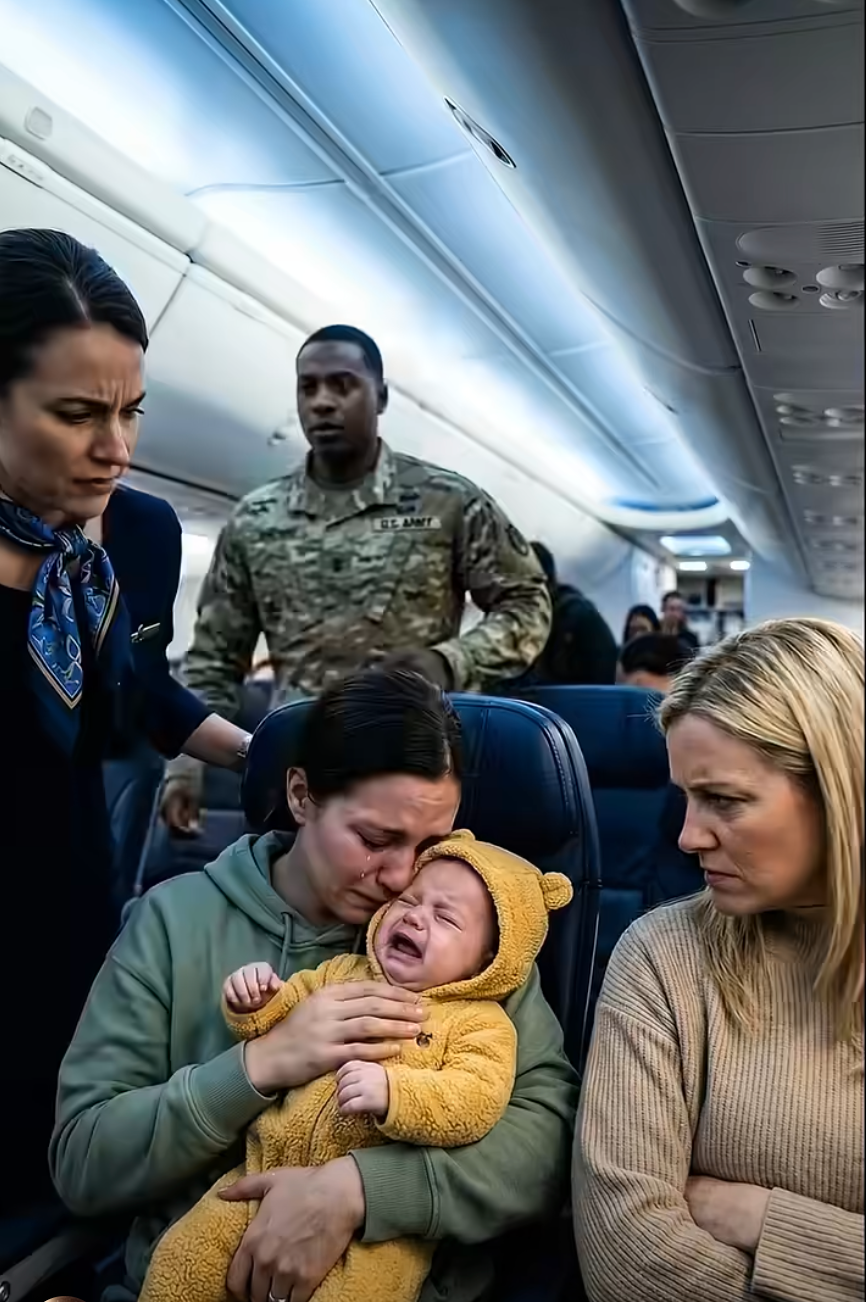
The sound tore through the pressurized cabin of Flight 409 like a physical blow. Every head in the economy section swiveled in unison, a collective organism of curiosity and dread. My eyes, along with a hundred others, locked onto the source of the vitriol: a woman seated in 4A, radiating a terrifying, manicured fury.
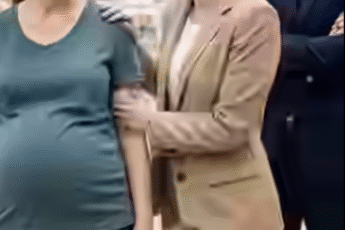
She was a vision of calculated perfection, a woman who had clearly spent a fortune to look like she didn’t care, yet cared entirely too much. She was Brenda Kensington—though I wouldn’t learn the name of the cosmetic empire’s CEO until much later—and she wore her wealth like a suit of jagged armor. Her blazer was sharp enough to draw blood, her sunglasses were perched on her nose like a visor, and her face was pulled tight in a mask of eternal, chemically induced youth.
And then, the catalyst for her explosion echoed again: the high-pitched, ragged wail of an infant.
It was a sound that drilled into the primal part of the brain, the kind of cry that speaks of exhaustion and confusion. My heart immediately lurched for the mother in seat 5A. She looked barely twenty, a fragile wisp of a girl with dark circles under her eyes that spoke of sleepless nights and deep, unspoken grief. She was cradling a tiny, squirming bundle, bouncing him with a rhythmic desperation, whispering broken lullabies that were swallowed whole by the baby’s screams.
“I’m so sorry,” the young mother stammered, her voice fracturing. Tears were already carving tracks through her minimal makeup. “He’s just… his ears hurt from the pressure. I’m trying. I promise, I’m trying.”
Brenda Kensington was not in the market for apologies. She spun around in her seat, her movements jerky and predatory. “I did not pay thousands of dollars for this ticket to listen to a biological air raid siren! I have a board meeting in London that will decide the fate of three thousand employees! I expect peace! I expect silence! That thing is a hazard to my sanity!”
The flight attendant, a young man named Kevin with a badge that looked too heavy for his shirt, scurried over, his professional smile wavering at the edges. “Ma’am, is there a problem? Can I get you a water?”
“Water?” Brenda shrieked, her voice climbing an octave. “I don’t want hydration, you incompetent steward! I want a solution! Move me to First Class! Sedate the brat! Throw them off! I don’t care what you do, just excise that noise from my existence!”
Kevin swallowed hard, clutching his manifest. “Ma’am, First Class is full. The flight is at capacity. And we certainly cannot sedate an infant. Please, lower your voice.”
Brenda leaned forward, invading Kevin’s personal space, her perfectly lacquered finger merely an inch from his nose. The air around her smelled of expensive musk and cold ambition. “Listen to me closely, honey. If that screaming maggot ruins my focus, I will buy this airline just to fire you. Do you understand? Handle it. Or I will.”
I clenched my fists in my lap, the leather of my carry-on biting into my palms. The cruelty was so casual, so reflexive. But before I—or anyone else—could intervene, a shadow fell over the aisle.
From the seat across from me, a mountain of a man unfolded himself. He rose slowly, like a tectonic plate shifting. He was dressed in a fatigue uniform, crisp and regulation-perfect, the fabric stretching over shoulders that looked like they had carried the weight of the world. His hair was a severe buzz cut, graying at the temples, and his face was a roadmap of hard years and harder choices.
Sergeant Major Thomas “Tommy” Miller.
He stepped into the aisle, his boots making a heavy, deliberate thud against the carpet. His eyes were like chips of flint—hard, unyielding, but not unkind.
“Excuse me, ma’am,” he rumbled. His voice was a low baritone that cut through the baby’s shrieks and Brenda’s hysterics like a hot knife through butter.
Brenda barely glanced at him, dismissing him as just another annoyance. “What? Are you going to tell me to breathe? To find my ‘center’? Save it, G.I. Joe.”
He didn’t answer her. He didn’t even look at her. He turned his back to Brenda and faced the young mother. His expression softened, the granite features melting into something surprisingly gentle.
“Ma’am,” he said softly. “I know how hard it is. My little one had colic for six months straight. Would you mind switching seats with me? I’m in the aisle up here. There’s a bit more room to walk him, rock him a bit. The engine hum is louder there, too; sometimes the white noise helps them sleep.”
The young mother looked up at him, her eyes wide with disbelief. “You… you would do that?”
“It would be my honor,” Tommy said, offering a hand to help her up. “Go on. Take 4C. I’ll take 5A.”
“Thank you,” she whispered, grabbing her diaper bag. “Thank you so much.”
As they swapped, the cabin seemed to exhale. The mother moved the baby away from the epicenter of Brenda’s rage. But the drama was far from over.
The big man settled into seat 5A—the seat directly behind Brenda. Or rather, wait—he directed the mother to his seat, and he took hers. He was now sitting directly in front of Brenda Kensington.
He settled his massive frame into the seat, his broad shoulders completely filling Brenda’s field of vision. He buckled his belt with a definitive click. Then, with a slow, deliberate movement, he reached for the recline button on his armrest.
The seat creaked in protest, then surrendered. It tilted back. And back. And back.
Because of his size and the leverage he applied, the seat didn’t just recline; it practically collapsed into Brenda’s lap. Her tray table jammed into her stomach. Her laptop screen was forced shut.
She gasped, trapped behind a wall of solid muscle and quiet determination.
“Comfortable?” Tommy asked, not turning around. His voice dripped with a dryness that could parch a desert.
“You… you brute!” Brenda sputtered, struggling to move her legs. “This is assault! Move your seat up this instant!”
“I believe,” Tommy said, staring straight ahead at the safety brochure, “that I am within my rights to recline for the duration of the flight. I suggest you try to sleep. It’s a long way to London.”
For the first time in her life, Brenda Kensington was speechless. She was boxed in, physically and metaphorically. And somewhere in the back of the plane, lulled by the hum and the distance from the hostility, the baby finally drifted into a peaceful sleep.
But as the plane taxied to the runway, the look in Brenda’s eyes shifted from anger to something darker. She wasn’t done. She was just reloading.
Six hours.
We were suspended in the twilight zone of the Atlantic crossing. The cabin lights were dimmed to a bruised purple hue. Most passengers were asleep, mouths open, necks cricked at impossible angles. But in row 4, the war continued in silence.
Brenda Kensington stared at the back of the soldier’s head with a hatred so pure it felt radioactive. She was accustomed to the sterile, controlled environments of boardrooms and VIP lounges. Being pinned in her seat, her knees acting as a lumbar support for a man she deemed a peasant, was agonizing.
Sergeant Major Tommy Miller stared straight ahead, eyes open. He could feel her gaze boring into his skull, a physical itch between his shoulder blades. He offered a grim smile to the empty air. Let her stew. He had endured sandstorms, shrapnel, and the bureaucratic hell of the VA. A narcissist in a blazer was a vacation.
He closed his eyes, trying to find rest, but the hum of the jet engines played tricks on his mind. The frequency shifted, deepening, transforming into the growl of a diesel engine.
(Flashback)
Fallujah. The heat was a physical weight, pressing down on his chest. The air tasted of copper and ancient dust. The radio crackled: “Contact! Contact front!”
Tommy gripped his rifle, his heart hammering a frantic rhythm against his ribs. He saw Sergeant Davies, a man who had taught him how to tie a tie and how to clear a room, go down in a spray of red mist. Tommy moved on instinct, a machine of flesh and training. He dove for cover behind a crumbled wall, laying down suppressive fire.
Through the scope, amidst the chaos, he saw movement. Not a combatant. A boy. No older than seven, frozen in the middle of the street, clutching a tattered soccer ball. His eyes were wide, dark pools of terror.
“Run!” Tommy screamed, though he knew the boy couldn’t hear him over the roar of the .50 cal. “Get out of there!”
He saw the insurgent on the rooftop raise the RPG. Tommy swung his rifle, firing, but he was a fraction of a second too slow. The world dissolved into a blinding white light and a sound so loud it was silent.
(End Flashback)
Tommy’s eyes snapped open. His hands were gripping the armrests so hard his knuckles were white. His breath hitched in his throat. The memory was always there, a ghost haunting the periphery of his vision. That day, amidst the blood and the dust, he had made a silent covenant with the universe: he would never again stand by and watch the innocent be crushed by the strong.
Brenda Kensington was no insurgent. She carried a handbag, not a rifle. But the energy was the same. The callous disregard for another human being’s suffering. The belief that her comfort outweighed another person’s survival. Bullies came in many forms, and Tommy had sworn to man the perimeter against all of them.
Brenda, meanwhile, had reached her breaking point. The pressure in her legs was unbearable. She jammed her knee into the back of Tommy’s seat.
“Excuse me!” she hissed, her voice vibrating with suppressed rage.
Tommy didn’t respond. He didn’t flinch.
“I know you can hear me!” She raised her voice, causing a few sleeping passengers to stir. “This is deliberate! You are torturing me!”
Tommy slowly turned his head, just enough so his profile was visible in the dim light. “Yes, ma’am?”
“Move. Your. Seat. Forward,” she enunciated each word as if speaking to a child. “I can’t breathe. My circulation is being cut off. This is an assault on my person.”
Tommy raised a singular, bushy eyebrow. “Am I assaulting you? Or am I simply exercising the exact same entitlement you displayed earlier? Perhaps I’m just tired, ma’am. Tired of seeing people who have everything treat people who have nothing like they are invisible.”
Brenda’s face flushed a deep, blotchy red, visible even in the dark cabin. She opened her mouth to unleash a torrent of abuse, to remind him of her net worth, her connections, her power.
But something stopped her.
In Tommy’s eyes, she didn’t see the usual intimidated reflection she was used to. She didn’t see anger. She saw an abyss. She saw a man who had looked into the face of death and walked away unimpressed. For the first time in twenty years, Brenda Kensington felt a flicker of genuine, primal fear. She was a shark who had just realized she was swimming in the tank with a kraken.
She leaned back, defeated, slumping into the limited space she had left.
“Fine,” she muttered, crossing her arms. “You win. Enjoy your victory, GI Joe.”
She shifted her legs, trying to find a position that didn’t scream with pain. As she moved her left calf, she felt a sudden, sharp pinch. It was distinct—not a cramp, but a piercing, needle-like sting.
“Ouch!” She rubbed her calf vigorously. She looked down toward the floor, squinting into the gloom under Tommy’s seat.
Something moved.
It was small, brown, and fast. It skittered away from her foot, disappearing into the shadows of the ventilation grate. A spider. A stowaway from the cargo hold, perhaps, or a hitchhiker from the luggage.
Brenda felt a cold dread wash over her, totally unrelated to the soldier in front of her. She had always been terrified of insects, but this was different. The sting on her leg wasn’t fading; it was beginning to throb, a hot, pulsating rhythm that synced with her heartbeat.
She opened her mouth to call for Kevin, to complain again, but her throat felt tight. Scratchy.
She coughed. Then she coughed again, harder.
And then, the scream came. But this time, it wasn’t a scream of entitlement. It was the terrified, gargling cry of a woman fighting for air.
The sound ripped through the cabin, shattering the uneasy peace. All eyes snapped to row 4.
Brenda was half-standing, clawing at her throat. Her face, previously a mask of cosmetic perfection, was now a mask of horror. Her skin was turning a patchy, vibrant red, and her lips were swelling rapidly, blooming like grotesque flowers.
Tommy didn’t jump. He didn’t panic. He moved with the calculated, fluid speed of a combat medic under fire. He unbuckled and was out of his seat in a heartbeat, kneeling beside her.
“What is it?” he barked, his voice commanding. “Talk to me!”
“Spider…” Brenda choked out, the word barely a whisper. Her breath came in ragged, whistling gasps. “Bit… me…”
Tommy looked down. He saw the swelling on her calf immediately—an angry, purple-red welt with a necrotic center, expanding visibly by the second. The tissue around it was hard and hot to the touch.
“Brown Recluse? Or a Widow?” Tommy muttered to himself, his mind racing through his survival training. He looked at her face. Her eyes were bulging, bloodshot. Her hands were scrabbling at the air.
“Anaphylaxis,” he announced to the cabin, his voice projecting clearly. “She’s going into systemic shock.”
Brenda slumped forward, her strength evaporating. The arrogance, the wealth, the meetings—it all dissolved. She was just a terrified animal caught in a trap of biology. She gripped Tommy’s arm, her nails digging into his uniform.
“Help… me…” she wheezed. “Please…”
Tommy turned to the aisle, spotting Kevin running toward them. “Get the pilot on the comms! Tell him we have a medical emergency, Grade Alpha. Potential systemic failure. We need to land. Now!”
Kevin’s face went white, but he nodded and ran for the cockpit.
“Is there a doctor on board?” Tommy shouted to the sea of faces.
A middle-aged man in a tweed jacket stood up three rows back. “I’m a rheumatologist, but I can help.” He rushed over, checking Brenda’s pulse. “Thread-y. Rapid. She’s crashing. Her airway is closing. We need epinephrine immediately!”
Kevin returned, breathless, carrying the red medical kit. He ripped it open, frantic hands searching. He pulled out bandages, aspirin, antiseptic…
He froze. He turned the bag upside down.
“Where is it?” the doctor yelled.
“It… it’s not here,” Kevin stammered, horror dawning on his face. “The EpiPen. It was used on the flight out of Dubai for a peanut allergy. They… ground crew said they restocked it. They marked it as restocked!”
A collective gasp rippled through the cabin. A clerical error. A checked box that wasn’t checked. It was the banality of bureaucracy, and it was about to kill Brenda Kensington.
“She has two minutes, maybe three, before total respiratory arrest,” the doctor said, his voice grim. “Without epi, we can’t stop the swelling.”
Brenda’s eyes rolled back in her head. Her body went limp in the seat, sliding sideways.
Tommy looked at her. He saw the woman who had insulted him, who had belittled a young mother. But he didn’t see an enemy. He saw a casualty. And Sergeant Major Miller did not leave casualties behind.
“Think, Miller, think,” he hissed to himself.
He looked at the bar cart Kevin had abandoned nearby. His eyes landed on the miniature bottles.
“Doctor,” Tommy said, his voice dropping to a low, intense growl. “Alcohol is a vasodilator, right? In high enough quantities? It thins the blood?”
“Technically, yes, but—”
“And if we slow the heart rate manually? Keep the venom from pumping so fast while keeping the airway open?”
Tommy didn’t wait for an answer. He grabbed a handful of miniature whiskey bottles—Jack Daniels, high proof. He cracked two open.
“Kevin, I need a belt. Now!” Tommy barked.
He turned to the doctor. “I’m going to create a pressure dressing to localize the venom in the leg. You monitor her airway. If she stops breathing, you cut. Understand?”
The doctor looked terrified but nodded. “Do it.”
Tommy poured the whiskey directly over the angry bite wound, drenching the fabric of her stockings. The evaporation would cool the area, and the alcohol would act as a crude antiseptic. But then he did something else. He soaked a napkin in the whiskey and pressed it under her nose.
“Breathing reflex,” he muttered. “Come on.”
He took the belt Kevin handed him and wrapped it high on her thigh, cinching it tight—not enough to kill the limb, but enough to slow the venous return. He was buying seconds.
“Hold on,” Tommy whispered, leaning close to Brenda’s ear. He gripped her hand, his calloused palm enveloping her manicured fingers. “You are not dying on my watch, lady. You are too stubborn to die.”
The plane suddenly banked hard to the left. The captain’s voice crackled over the intercom, urgent and clipped. “Ladies and gentlemen, we are initiating an emergency descent into Gander, Newfoundland. Brace for a rapid landing.”
The floor dropped out from under them. Gravity slammed Brenda back into her seat. Her breath hitched—a desperate, rattling sound like a bag of marbles being shaken. Her eyes flickered open for a fraction of a second.
They met Tommy’s.
In that fleeting moment, amidst the screaming engines and the smell of cheap whiskey and fear, the cosmetics CEO and the Soldier were stripped bare. There were no bank accounts. No ranks. Only the terrified plea of a dying woman and the iron will of the man holding her to the earth.
Then, her eyes rolled back, and her hand went limp in his.
The silence of Gander International Airport was absolute. It was a cold, stark silence that felt heavy in the chest.
The paramedics had swarmed the plane the moment the wheels kissed the tarmac. They had intubated Brenda right there in the aisle, a chaotic ballet of tubes and wires, before rushing her off on a stretcher.
I watched from my window seat as the ambulance lights faded into the Newfoundland fog. The cabin remained quiet. No one reached for their overhead bags. No one checked their phones. We had all witnessed something profound, a collision of life and death that made our travel plans seem laughably insignificant.
Tommy sat in seat 4A—Brenda’s seat. He was wiping his hands with a wet wipe, scrubbing away the residue of the whiskey and the sweat. He looked exhausted, aged ten years in ten minutes. The young mother, Sarah, reached through the gap in the seats and touched his shoulder.
“Is she…?” Sarah asked, her voice trembling.
“She had a pulse when they took her,” Tommy said softly. “Weak. But it was there.”
We were grounded for four hours while the airline sorted out the paperwork and restocked the medical kit. When we finally took off again for London, the atmosphere was transformed. Strangers spoke to one another. The young mother’s baby cried again, briefly, and three people stood up to offer help, playing peek-a-boo over the seats.
The “ripple effect” of the incident had begun.
I followed the story in the news over the next few weeks. It was everywhere. “Cosmetics Mogul in Near-Death Mid-Air Drama.”
Brenda remained in the ICU in St. John’s for three days, in critical but stable condition. The spider had been a Loxosceles reclusa—a Brown Recluse. Rare for it to be on a plane, but deadly for someone with Brenda’s specific, unknown allergy to the toxin.
I learned that Brenda’s daughter, Emily, had flown to her bedside. The tabloids reported a tearful reunion. Emily hadn’t spoken to her mother in five years, driven away by Brenda’s relentless pursuit of perfection. Her parents, Charles and Elizabeth, the founders of the company, were forced to confront the monster they had helped create in their daughter. The empire was shaken.
A week later, I found myself in London, finishing my assignment. Curiosity gnawed at me. I tracked down the hospital where Brenda had been transferred before her return to the US.
I wasn’t the only one visiting.
I saw him in the waiting room. Tommy Miller. He was wearing civilian clothes now—jeans and a flannel shirt—but he still sat with that military stillness.
“Sergeant Major,” I said, approaching him.
He looked up, recognizing me from the flight. “Just Tommy, please.”
“How is she?”
” awake,” he said. “Asking for people. Asking for… me.”
A nurse appeared. “Mr. Miller? She’s ready.”
I watched him walk into the private room. Through the crack in the door, I saw Brenda Kensington. She looked small. The makeup was gone. Her hair was pulled back in a simple tie. She looked older, yes, but also… softer. Human.
“You saved me,” she said. Her voice was a scratchy whisper, damaged by the tube and the swelling.
Tommy stood at the foot of the bed, hands in his pockets. “The doctors did the saving. I just bought time.”
Brenda shook her head weakly. “I remember. I remember what you said. You held my hand.” She looked down at her hands—hands that had signed million-dollar contracts and dismissed employees without a second thought. “After how I treated you… after what I called you… why?”
Tommy pulled up a chair and sat. He leaned forward, elbows on his knees.
“Because, Brenda,” he said, his voice steady. “In my line of work, we have a code. You defend the perimeter. You protect the unit. And on that plane? You were part of the unit. Every life has a perimeter worth defending. Even yours.”
Brenda looked away, tears sliding down her cheeks—real tears, unchecked by botox or pride. “I’ve been so loud,” she whispered. “So loud for so long, trying to prove I mattered. And I almost died because of a spider I couldn’t even hear.”
“Sometimes,” Tommy said, offering a small, crooked smile, “you have to get quiet to hear the things that actually matter.”
One Year Later.
The sun streamed through the windows of a small, converted warehouse in rural Kentucky. The walls were painted a cheerful, buttery yellow. It wasn’t a high-end spa, and it certainly wasn’t a corporate headquarters.
The sign above the door read: The Kensington-Miller Foundation for Rural Health.
I stood in the back of the room, notebook in hand. The clinic was bustling. There were farmers in muddy boots, young mothers with colicky babies, and veterans dealing with the invisible scars of war. They were receiving checkups, medication, and counseling—all for free.
Brenda Kensington stood in the center of the room. She was wearing practical flats and a simple blouse. She was laughing—a genuine, throaty sound—as she held a clipboard, directing a patient to an exam room. She looked vibrant, not because of surgery, but because of purpose.
Next to her, organizing a stack of supplies, was Tommy Miller. He had retired from the service six months ago. He was the Director of Operations here.
I watched them work. The Soldier and the CEO. The oddest couple imaginable, bound together by a few minutes of terror at thirty thousand feet.
Tommy clapped Brenda on the shoulder as they passed each other. “We’re out of amoxicillin in exam room two,” he said.
“I’m on it,” Brenda replied, moving with efficiency. “And Tommy? The new pediatric wing funding came through.”
“Good work, boss.”
“Partners, Tommy. Partners.”
Brenda paused for a moment, looking toward the window. The afternoon sun caught the glistening threads of a spider web woven into the upper corner of the window frame. A year ago, she would have screamed. She would have fired the janitor. She would have burned the building down.
Now, she stared at it. She traced the delicate, intricate geometry of the web. It was fragile, yet it held strong against the wind. It was a marvel of engineering and survival.
She smiled, a small, private smile.
“Excuse me, ma’am?” a young mother tapped her on the shoulder. It was Sarah—the girl from the plane. She was volunteering at the front desk now. “We have a full waiting room.”
“Let them in,” Brenda said, turning away from the window, her eyes bright with a new kind of fire. “Let everyone in.”
Redemption, I realized as I closed my notebook, wasn’t a destination you arrived at. It wasn’t a trophy you won. It was a path you chose to walk, day after day, step after step.
And as the sun set over the rolling Kentucky hills, Brenda Kensington knew she was finally, truly, on the right one.
Like and share this post if you find it interesting!