I walked into the school cafeteria with Lina’s favorite lunch, eager to surprise her for her tenth birthday, certain that the day would be simply touching, as she was growing up without even realizing what was really to come.
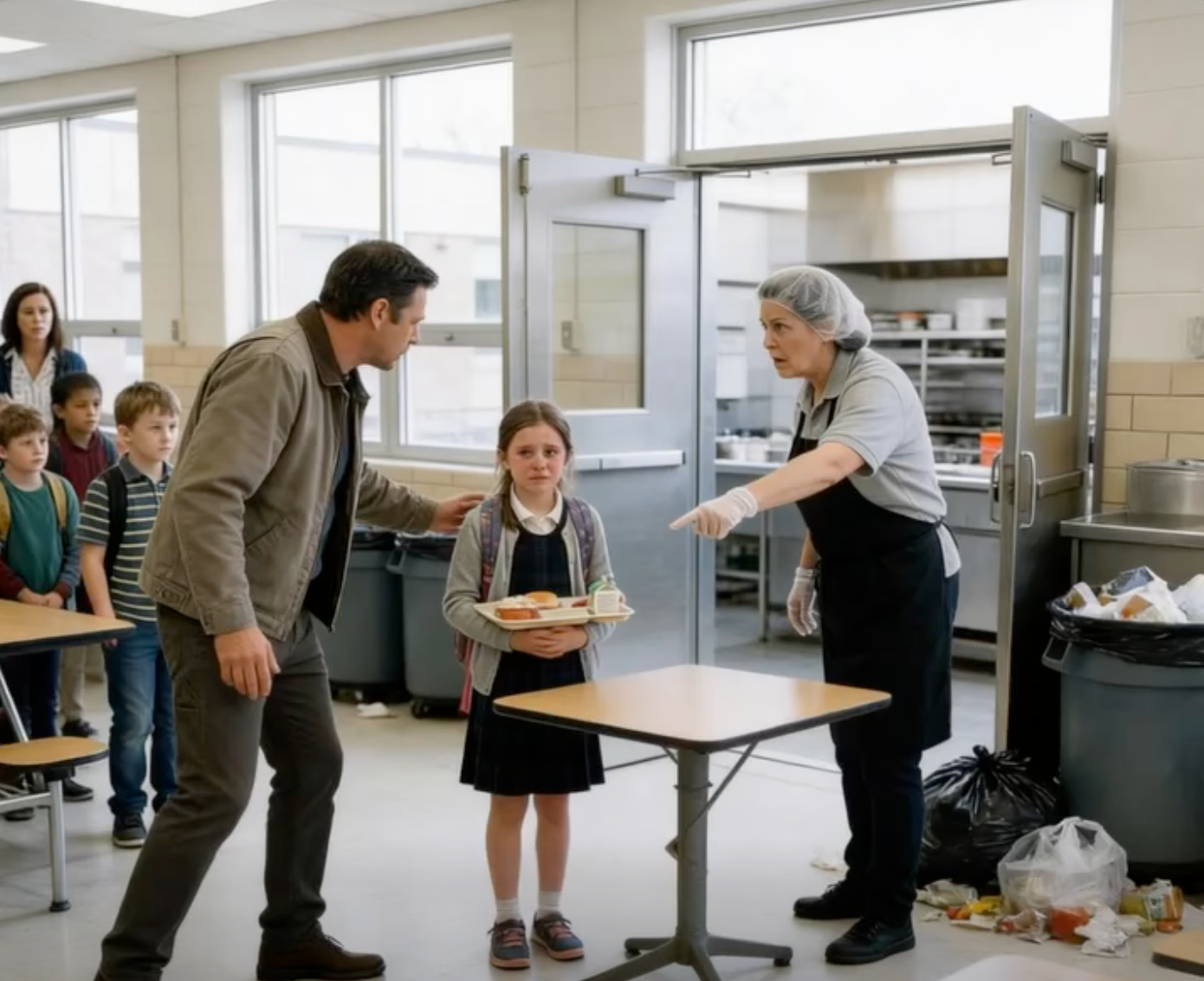
As soon as she noticed a bright table by the window, one of the staff members stood in her way and, without explanation, directed her to another seat, clarifying that some seats were reserved for “deserving” families—those who donate money or actively participate in fundraising.
Lina didn’t protest or cry. She simply complied—with that subtle gesture children make when they realize that resisting sometimes only deepens their shame and attracts even more stares.
At that moment, something inside me snapped. I realized how quickly a child can learn to belittle themselves when adults show them—without saying it out loud—that they are less important than others.
I walked closer, placed her food on the forbidden table, and calmly asked why a child was being treated as if her place were next to the garbage. They responded with vague rules and arguments related to financial contributions.
I reminded them that my daughter supports her school every day simply by being there, trying her best, remaining respectful and kind, and that she’s ten years old and celebrating her birthday.
The staff member insisted she was simply following the rules. I pointed out to her, without raising my voice, that some rules are born the moment someone decides to humiliate a child.
My daughter was forbidden to sit at the table and sent to eat next to the trash cans—what I did next left the entire cafeteria speechless.
I addressed the entire cafeteria, calmly but firmly: “Look at this child. She deserves to eat with dignity, without discrimination. It’s not money or appearance that determines a person’s worth, but the respect we show them.”
For a moment, no one dared move. Then, to my great surprise, the other children and even some parents stood up and began applauding. Quiet words of support were heard. The employee, confused and unable to find an answer, froze behind her counter.
My daughter was forbidden to sit at the table and sent to eat next to the trash cans—what I did next left the entire cafeteria frozen.
Lina, her eyes shining, squeezed my hand and whispered, “Thank you, Dad.” And in that moment, I realized that the simplest act—giving a child justice and dignity—can change the atmosphere around us.
That day, she blew out her ten candles with a beaming smile, and the entire cafeteria learned a lesson no written rule can ever teach: dignity is not for sale.