The Keys to the Double C
PART I — THE RED WEDDING
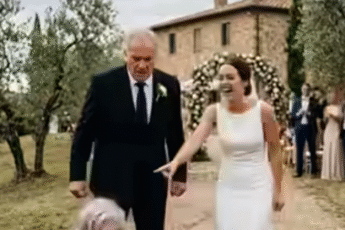
My daughter’s wedding day began like any father’s dream—a blur of nerves, pride, and the bittersweet realization that the little girl who used to hold my finger was now a woman holding another man’s hand. Avery looked radiant in her grandmother’s vintage lace dress, the same one my late wife, Margaret, had worn thirty-two years ago. As I walked her down the aisle of the old stone chapel, the morning sun filtering through stained glass, I fought back tears when she squeezed my arm and whispered, “I wish Mom could see this.”
For a moment, everything felt perfect. The air smelled of roses and beeswax candles. The organ music swelled. For a moment, I forgot the gnawing unease I’d been carrying about Alan Peterson for months.
But weddings have a way of acting like a pressure cooker. They strip away the veneer of civility, revealing the true nature of people when the stakes—and the alcohol consumption—are high. And Alan’s mask didn’t just slip; it shattered.
It happened during the cocktail hour. I was standing near the mahogany bar, nursing a whiskey and watching Avery laugh with her college friends. The reception hall was a grand ballroom in downtown Houston, filled with two hundred guests—business associates, distant cousins, people I barely knew.
Alan appeared beside me. His bow tie was loosened, his face flushed with champagne and something darker.
“Something harder, Clifford,” he said, clapping a hand on my shoulder. The grip was too tight. It wasn’t friendly; it was possessive. “We need to talk.”
I turned, noting how the conversation in our immediate vicinity died down. “What about, son?”
The word son seemed to act like an irritant. His jaw clenched. “About the ranch. About Avery’s future. Our future.”
“This isn’t the time or place, Alan,” I said, keeping my voice low. “It’s your wedding day. Enjoy it.”
“Actually,” he leaned in, his voice dropping to a whisper that carried more menace than a shout, “it’s the perfect time. All these witnesses around. All these important people.”
A chill snaked down my spine. Witnesses.
“Alan, whatever you’re thinking—”
“I’m thinking,” he interrupted, his voice rising, “that it’s time for some generosity. Some real family support.”
He reached into his jacket pocket and pulled out a small, black velvet box. For a second, I thought it was another gift for Avery. But when he snapped it open, my blood ran cold.
Inside sat a set of keys. Brass. tarnished. The keys to the ranch house, the barn, the equipment shed. Keys I kept in a lockbox in my study.
“How did you get those?” I asked, my voice trembling with a mixture of shock and rage.
Alan’s smile turned predatory. “Avery made copies. She thought it would be a nice surprise. A symbolic gesture.” He held the box higher, pivoting so the guests around us could see. “But I think we need the originals, don’t you? Along with the deed transfer papers.”
The whiskey in my glass rippled as my hand shook. “The what?”
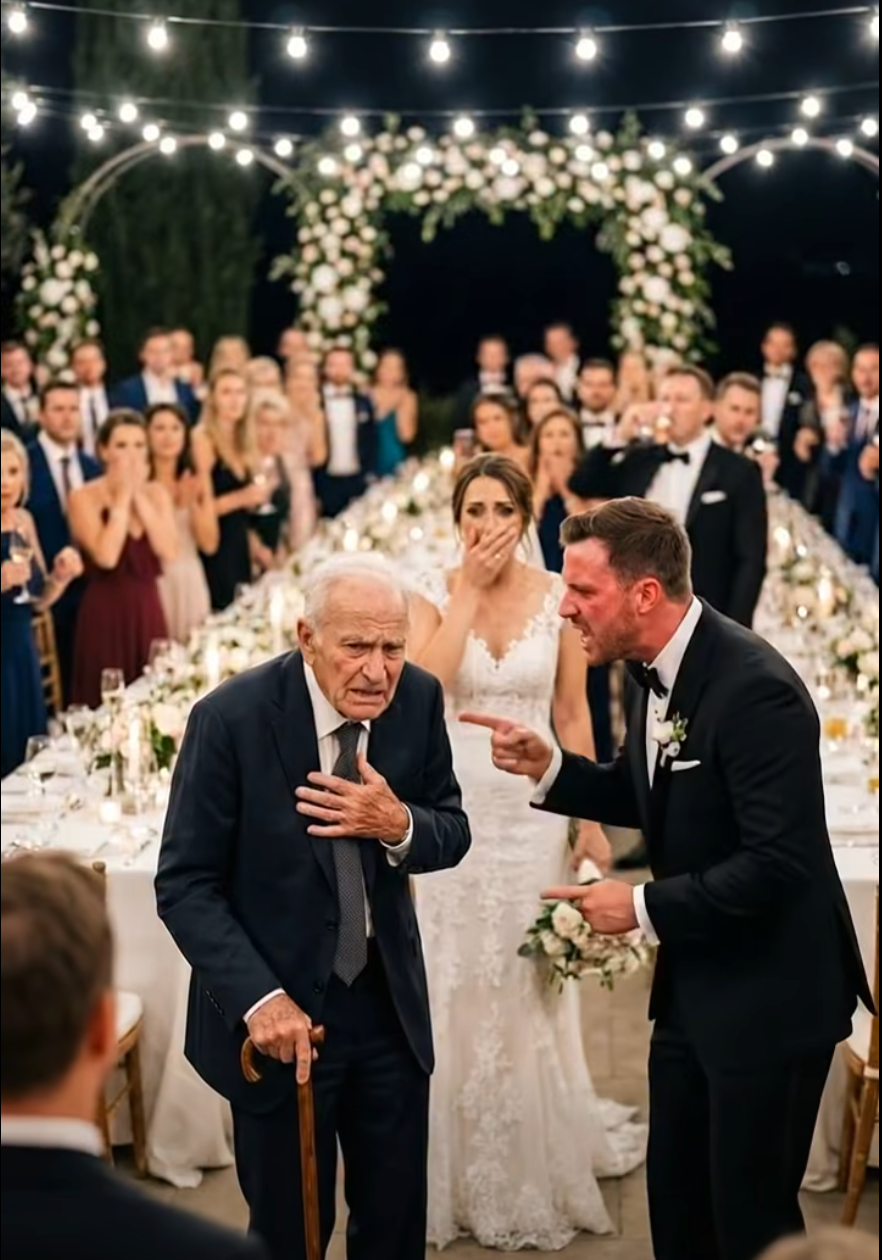
“Come on, Clifford. Don’t play dumb.” His voice boomed now, silencing the string quartet. “Avery is your only child. The Double C Ranch should be hers. Should be ours. And frankly, a man your age shouldn’t be carrying that kind of burden alone.”
I felt the weight of two hundred pairs of eyes. The silence was absolute. Alan had orchestrated this perfectly—a public ambush where refusal would make me look like a stubborn, selfish old man hoarding his wealth.
“The ranch isn’t going anywhere,” I said carefully, my eyes locking onto his. “And this isn’t a conversation for—”
“For when? When you’re dead?” Alan shouted. “Avery deserves security now. We both do. That ranch is sitting there wasted on an old man who can barely manage it anymore!”
The insult hit like a physical blow. Somewhere in the crowd, Avery’s Aunt Martha gasped. In the distance, I saw Avery pushing through the crowd, confusion written across her face.
“I said no, Alan,” I stated. My voice was steady, iron-clad.
That was when everything changed.
Alan’s face twisted with a rage so pure it looked painful. All pretense of the charming groom vanished. He stepped into my personal space, his breath hot with champagne and entitlement.
“You stubborn old fool,” he hissed. “Do you have any idea who you’re messing with?”
Before I could respond, before I could even brace myself, Alan’s hand cracked across my face.
The sound was sickening—a meaty slap that echoed through the marble hall like a gunshot.
I lost my balance. My left foot slipped on the polished floor, and I went down hard. My hip struck the marble first, sending a jagged bolt of agony up my spine, followed by my shoulder. I lay there, stunned, the metallic taste of blood filling my mouth where I’d bitten my tongue.
For three seconds, the room was a vacuum of sound.
Then, the whispers started, rising like a tidal wave. “Did he just hit him?” “Oh my god.” “Call security.”
I pushed myself up on one elbow. Alan stood over me, chest heaving, his fist still clenched. He looked almost surprised by his own violence, but there was no regret in his eyes—only frustration that I hadn’t simply obeyed.
Then I saw Avery.
She stood at the edge of the circle, hands pressed to her mouth, tears streaming down her cheeks. But she wasn’t rushing to help me. She was staring at Alan with something that looked terrifyingly like fear.
In that moment, lying on the cold floor, I realized this wasn’t the first time she had seen this monster.
Slowly, painfully, I got to my feet. My hip screamed in protest. A bruise was already blooming on my cheekbone. But I stood tall. I smoothed my tuxedo jacket. I looked Alan straight in the eye, then swept my gaze over the horrified crowd.
“I think,” I said quietly, my voice carrying in the dead silence, “this reception is over.”
I turned and walked toward the exit.
“Clifford, wait!” Alan shouted behind me, his voice pitching high with sudden desperation. “I didn’t mean… that was… we can work this out!”
I didn’t turn around. I walked out of the hall, out of the hotel, and into the humid Houston night.
My truck was waiting in the valet lot. Once inside the cab, safe behind locked doors, I pulled out my phone. My hands were shaking violently now, the adrenaline crash hitting me.
I dialed a number I hadn’t used in years. It rang once. Twice.
“Clifford?” A familiar, deep voice answered. “How did the wedding go?”
I closed my eyes. “Robert, I need you to come to Houston. Tonight. It’s time.”
There was a pause on the line. A heavy silence. “Are you sure? Once we do this, there is no going back. The contract is clear.”
I looked back at the hotel. I thought of my daughter’s fearful eyes. I thought of the slap.
“I’m sure,” I said. “It’s time everyone knew the truth about the ranch.”
CLIFFHANGER:
As I drove away, I caught a glimpse of Alan in my rearview mirror. He was standing under the hotel awning, frantically talking on his phone, his face white with panic. He had no idea what lever he had just pulled. He thought he was fighting an old man for a deed. He didn’t know he had just declared war on a two-billion-dollar corporation that didn’t take kindly to people touching their assets.
PART II — THE MERIDIAN CONTRACT
The drive back to the ranch took two hours—plenty of time for the ghosts of the last two years to ride shotgun.
Twenty-five miles of dark highway stretched before me, illuminated only by my headlights and the flashing memories of Alan’s slow, calculated invasion of my life.
It had started subtly. Little comments at Sunday dinner. “Dad seems tired, doesn’t he, Avery?” “Maybe he’s overwhelmed with the acreage.”
Then came the “help.” Alan, a man who wore Italian loafers to a barbecue, suddenly had opinions on cattle rotation. “Alan says it’s not fair I don’t have a legal claim to the land,” Avery had told me a year ago, her voice carefully neutral but her eyes pleading. “He says most fathers would have started the transfer process for tax purposes.”
Tax purposes. The phrase made me grip the steering wheel tighter.
Alan had systematically gaslighted my daughter into believing I was senile, stubborn, and incompetent. He had painted a picture of a faltering old man needing a savior. And Avery, my sweet, trusting Avery, had bought it because she loved him.
But Alan had made one fatal miscalculation. He assumed he knew everything about me. He assumed the Double C Ranch was mine to give.
He was wrong.
The truth about the ranch began twenty-five years ago, on the worst day of my life. Margaret had just died after an eighteen-month battle with cancer that drained our savings, our insurance, and my will to live. I was sitting in a hospital billing office, staring at $300,000 in debt, when the bank called to start foreclosure proceedings.
That evening, Robert Hawthorne knocked on my door.
He drove a black sedan and carried a leather briefcase. He didn’t look like a rancher; he looked like Wall Street.
“Mr. Wellington,” he had said, sitting on my porch while I stared at the sunset I thought I was seeing for the last time. “I represent the Meridian Investment Consortium. We specialize in agricultural preservation.”
The deal was simple, though secret. Meridian bought the ranch—paid off the debts, the medical bills, the mortgage. In exchange, the title transferred to them. But here was the kicker: I stayed on as the Ranch Manager. To the outside world, nothing changed. I lived in the house. I ran the operations. I kept my dignity.
“We preserve heritage,” Robert had explained. “Our investors play the long game. You run it until you retire. Avery inherits your position, or she can buy us out at market value.”
I signed the contract that night. It saved my life. It saved Avery’s childhood home. But the contract had a strict confidentiality clause. If the true ownership was revealed to non-family members, Meridian could terminate the arrangement.
So I kept the secret. I let Avery believe the land was hers by birthright. I planned to tell her when she was ready.
Then came Alan.
As I pulled up the long gravel driveway of the Double C, my phone lit up. Alan. I let it go to voicemail.
I walked into my study, my hip throbbing, and unlocked the safe. I pulled out the medical reports from last month—a full cognitive and physical evaluation I had secretly undergone to prove I wasn’t senile. I pulled out the dossier my private investigator had compiled on Alan.
And finally, I pulled out the original Meridian contract.
My phone pinged. A voicemail from Alan.
“Clifford, look… I know things got out of hand. I was stressed. Maybe too much champagne. But we’re family now. Call me back. We need to talk about moving forward. The ranch transfer needs to happen this week.”
The audacity was breathtaking. He had assaulted me, humiliated me, and now he was demanding I sign over the deed this week.
I sat at my desk and waited.
Dawn broke over the mesquite trees, painting the sky in bruised purples and oranges. At 7:00 AM sharp, the cavalcade arrived.
Three black SUVs pulled up, kicking up dust. Six people stepped out.
Robert Hawthorne led them. He hadn’t aged much in twenty-five years—still sharp, still imposing. Behind him walked Margaret Caldwell, the Chairwoman of the Meridian Board. A woman of steel and silver hair. Then came the legal counsel, the CFO, and the head of security.
“Clifford,” Robert said, shaking my hand on the porch. He looked at the bruise on my cheek. His eyes hardened. “We flew in from Dallas and Phoenix. The Board is… displeased.”
“Displeased is an understatement,” Margaret Caldwell said, her voice crisp. “Mr. Wellington, we understand a Mr. Peterson attempted to extort our property and assaulted our manager?”
“That’s correct,” I said. “He believes I own the ranch. He’s demanding the deed.”
David Chen, the legal counsel, opened his tablet. “We’ve been busy. Mr. Peterson is currently under investigation for embezzlement at his firm. He owes $150,000 in gambling debts. He needs this ranch to liquidate it and flee.”
“He’s coming here at noon,” I told them. “I texted him. Told him I was ready to sign.”
Margaret Caldwell smiled. It was a terrifying expression. “Perfect. Let him come. It’s time Mr. Peterson learned that when he threatens you, he threatens a two-billion-dollar portfolio.”
CLIFFHANGER:
At 11:45 AM, Alan’s leased BMW rolled up the drive. He stepped out, looking smug, a file folder under his arm. He adjusted his tie in the side mirror, completely unaware that six of the most powerful people in Texas were watching him from behind the darkened windows of my living room. He walked up the steps, not realizing he was walking into a lion’s den.
PART III — THE TRAP
I opened the door before Alan could knock.
He breezed past me, the arrogance rolling off him in waves. “Clifford,” he said, not offering a hand. “Glad you came to your senses. Really, this is best for everyone. Avery was so worried about you last night.”
He set his briefcase on the dining table—my grandmother’s table—and popped the latches.
“I’ve brought the paperwork,” he said, spreading documents out. “Deed transfer. Power of Attorney. Everything we need to make this official.”
I looked at the papers. They were professionally drafted. He had been planning this for months.
“You’ve been busy,” I said dryly.
“I’m a businessman, Clifford. I believe in being prepared.” He smiled, that practiced, slick smile. “Now, just sign here, here, and here. And we can put that ugly business at the wedding behind us. I’m even willing to let you stay on as a consultant. You can keep your room.”
My room. In my own house.
“Tell me, Alan,” I said, sitting down opposite him. “What kind of developer are you selling to?”
His hand froze mid-gesture. “What?”
“The developer,” I repeated. “You’re in debt, Alan. $150,000 in gambling debts. An embezzlement investigation at your firm. You need cash, fast. You aren’t going to run this ranch. You’re going to liquidate it.”
His face drained of color. “You’ve been spying on me?”
“I’ve been protecting my daughter,” I said.
“This land is worth $4.8 million to a developer in Dallas,” Alan spat, dropping the pretense. “I’ve seen the comps. You’re sitting on a gold mine, playing cowboy, while Avery deserves a real life! A luxury life!”
“Does Avery know you plan to turn her childhood home into a subdivision?”
“Avery does what I tell her!” he shouted, slamming his hand on the table. “She trusts me! And once I have this deed, it won’t matter what you think. Now sign the damn papers, old man, or I will have you declared incompetent so fast your head will spin.”
That was the cue.
The door to the kitchen swung open.
“I don’t think you’ll be declaring anyone incompetent, Mr. Peterson,” a voice said.
Alan spun around.
Margaret Caldwell walked in, followed by Robert, David Chen, and three large men in suits who radiated ‘federal agent’ energy.
“Who the hell are you?” Alan demanded, backing up against the sideboard.
“I’m Margaret Caldwell,” she said, stepping into the light. “Chairwoman of the Meridian Investment Consortium.”
“And I,” Robert added, “am the actual owner of this property.”
Alan looked between me and them, his brain misfiring. “What? No. Clifford owns this. The deed…”
“The deed belongs to Meridian,” David Chen said, placing a copy of the 1998 contract on the table over Alan’s papers. “Mr. Wellington is our Ranch Manager. An employee. He has no legal authority to transfer this land to you, or to his daughter, or to the Pope.”
“That’s a lie,” Alan whispered.
“It’s a matter of public record, if you know where to look,” Margaret said. “Which you clearly didn’t. You were so busy counting your chickens, you forgot to check who owned the coop.”
“You assaulted a corporate officer,” Patricia Vasquez, the risk manager, said, stepping forward. “Last night. In front of two hundred witnesses. Assault on a senior citizen is a felony in Texas. Assaulting a Meridian employee… well, that’s just bad business.”
Alan looked for an exit. The security team blocked the hallway.
“This is a setup,” he choked out.
“This is an eviction,” Margaret corrected. “Mr. Peterson, we have recordings of your extortion attempts. We have proof of your fraud. And we have a restraining order effective immediately.”
David Chen slid a paper across the table. “You are to leave this property. You are to leave the state of Texas. If you contact Avery, or Mr. Wellington, or attempt to step foot on Meridian land again, we will hand this entire file to the District Attorney. And given your current legal troubles… I don’t think you want that.”
“Avery is my wife!” Alan shouted, desperate now.
“Actually,” David Chen said, checking his notes, “she isn’t. Our investigators found your first marriage license in Nevada. You never divorced her. You’re a bigamist, Mr. Peterson. Your marriage to Avery is void.”
The silence that followed was heavy. The air left the room.
Alan slumped. He looked at me, eyes pleading. “Clifford… please. I made mistakes. But I love her.”
I stood up, my hip aching, but feeling taller than I had in years.
“If you loved her,” I said, “you wouldn’t have tried to steal her home. Get out of my house.”
CLIFFHANGER:
Alan grabbed his briefcase and ran. He didn’t look back. He peeled out of the driveway, dust choking the air. But as the adrenaline faded, the real weight settled on me. “We need to find Avery,” I told Robert. “She’s at the hotel alone. She thinks she’s married. She thinks I ruined her wedding.” Margaret Caldwell put a hand on my arm. “We’re coming with you, Clifford. She needs to hear the truth from all of us. And she needs to know she still has a future here.”
PART IV — THE HOMECOMING
We found Avery in the hotel conference room an hour later. She was still wearing yesterday’s wedding dress, the lace hem stained gray from the floor. Her eyes were red and swollen. When she saw me walk in with six strangers in business suits, she stood up, panic flaring.
“Dad? Where’s Alan? He isn’t answering.”
I guided her to a chair. “Honey, sit down. We need to talk.”
For the next hour, we laid it all out. The Meridian Board members were gentle but thorough. They explained the bankruptcy from twenty-five years ago. They explained the contract.
Then, they explained Alan.
They played the recordings. They showed the financial records. They revealed the bigamy.
Avery didn’t scream. She didn’t rage. She went very, very quiet. It was the silence of a world imploding.
“He… he wanted to sell it?” she whispered, staring at the rendering of the subdivision. “He told me he wanted to raise our kids there.”
“He wanted the commission, Avery,” I said gently. “He needed the money to stay out of jail.”
She looked at me, tears spilling over. “And you… you don’t own the ranch?”
“I manage it,” I said. “I did it to save it. To save us.”
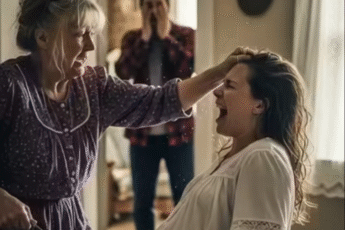
“I feel so stupid,” she sobbed, burying her face in her hands. “I let him convince me you were losing your mind. I was looking at nursing homes, Dad. I was going to betray you.”
“He manipulated us both,” I said, holding her tight. “But he’s gone now. And the marriage… it wasn’t real.”
Margaret Caldwell cleared her throat.
“Miss Wellington,” she said. “Meridian has a policy. We preserve heritage. Your father has managed the Double C impeccably for two decades. The offer to buy back the land has always stood.”
Avery wiped her eyes. “Buy it back? With what money? Alan drained our accounts.”
“Your mother had a life insurance policy,” I said. “And a trust. I never touched it. It’s been compounding interest for twenty-five years. It’s yours.”
Avery looked at me, stunned. “You saved it?”
“I saved it for you.”
Three months later, Avery moved back to the ranch.
She threw herself into the work, finding solace in the rhythm of the land. She mended fences, she balanced the books, she learned the business from the ground up—not as an heir, but as a partner.
The annulment was simple. Alan had vanished into Mexico, running from his debts. We never heard from him again.
Six months after the wedding that wasn’t, we sat on the porch. The sun was setting, painting the sky in the same colors as the day I signed the ranch away.
“I want to buy it,” Avery said suddenly. “The ranch. I spoke to Margaret. With the trust fund and a mortgage, I can do it.”
“Are you sure?” I asked. “It’s a hard life.”
“It’s an honest life,” she said. “And it’s ours.”
The closing ceremony was quiet. Just me, Avery, and the Meridian Board. When Avery signed the deed, Margaret Caldwell handed her a bottle of champagne.
“Welcome home,” she said.
That evening, we walked the fence line. The cattle lowed in the distance. The land smelled of dust and sage and freedom.
“Do you regret it?” Avery asked. “Keeping the secret?”
“I regret the pain it caused,” I said. “But I don’t regret saving this place for you.”
“Mom would be proud,” she said, squeezing my arm. “She’d say that home isn’t about who holds the deed. It’s about who bleeds for the land.”
Alan Peterson had tried to destroy us with greed and lies. But in the end, he gave us the greatest gift of all. He forced us to rebuild our family on a foundation of truth.
The Double C Ranch belongs to the Wellingtons again. And this time, we have the keys to prove it.
THE END
Like and share this post if you find it interesting.