The house smelled like roasted turkey and cinnamon when I pushed open the front door, a scent that should have signaled warmth and safety. Instead, it would soon become the olfactory trigger for the worst nightmare of my life.
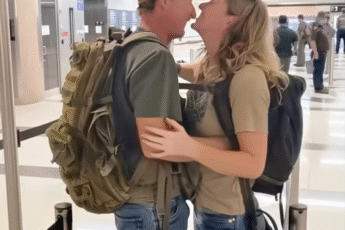
At eight months pregnant, every movement felt like hauling sandbags up a steep hill. The October chill had settled deep into my bones, driving me to seek refuge at my childhood home. My husband, Jake, was thousands of miles away on a military deployment in the Middle East, leaving me alone in our drafty apartment with swollen ankles, a faltering furnace, and a growing sense of isolation that pressed against my chest like the physical weight of my unborn daughter.
I had texted my mother, Catherine, earlier that afternoon, asking if I could stop by for an hour just to sit in a warm house and maybe have a cup of tea. She had responded with a single thumbs-up emoji. I took it as permission, though in hindsight, it was likely a dismissal she hoped I wouldn’t act upon.
The spare key was still under the ceramic frog by the porch, just like it had been since I was twelve. My sister, Alexis, had moved back home six months ago after her engagement imploded and her “influencer” lifestyle hit a financial wall. Mom had been walking on eggshells around her ever since, treating Alexis like a fragile piece of porcelain while I was treated like the packing peanuts—useful, but ultimately disposable.
Bass-heavy music thumped from somewhere deeper in the house, vibrating the floorboards beneath my aching feet. I shuffled through the entryway, one hand supporting my lower back, the other gripping my purse strap like a lifeline.
The living room opened up before me, and suddenly, the air left my lungs.
I wasn’t walking into a quiet Tuesday evening. I was staring at thirty-something people holding crystal wine glasses and laughing. Streamers in gold and black hung from the ceiling. A massive banner draped across the mantel read “Class of 2015 Reunion” in glittering letters.
The conversation died instantly, like someone had cut the power to a chaotic machine.
A woman in a tight red dress—someone I vaguely recognized as one of Alexis’s college sorority sisters—looked me up and down. Her perfectly lined lips curled into an expression that hovered somewhere between amusement and visceral disgust. Her friend, a blonde with hair extensions that probably cost more than my entire nursery setup, let out a snort that quickly morphed into full-blown, performative laughter.
Others joined in, their voices creating a chorus of mockery that made my skin crawl.
“Oh my god,” Red Dress said, gesturing at my stomach with her wine glass, the liquid sloshing dangerously close to the rim. “Look at that thing. It’s like she swallowed a watermelon whole. Is that even healthy?”
Blonde Extensions covered her mouth, though her shoulders shook with mirth. “Does it move? Can we see the alien move?”
Heat flooded my face, hot and prickly. I took a step backward, my hip bumping painfully into the doorframe. These were Alexis’s friends—people she’d spent four years with at Georgetown. People who seemingly had never worn maternity pants or dealt with heartburn that felt like swallowing battery acid.
Then I saw her.
Alexis stood near the fireplace in a black cocktail dress that hugged her gym-toned figure like a second skin. Her hair fell in perfect, glossy waves over her shoulders. She had always been the beautiful one, the one who turned heads when we walked into restaurants together, the one Mom bragged about to her book club while I was mentioned as an afterthought.
Her expression shifted from surprise to pure, unadulterated rage in less than a second.
“What are you doing here?” Alexis’s voice cut through the lingering laughter like a serrated blade. She strode toward me, her stilettos clicking rhythmically against the hardwood floor—a countdown to disaster.
“I… I texted Mom,” I stammered, my hand instinctively moving to my belly in a protective gesture I had developed over the past months.
“You useless woman with that huge stomach,” Alexis screamed, stopping just inches from my face. I could smell the expensive chardonnay on her breath. “You ruined my party. This was supposed to be my night! My reunion! And you waddle in here looking like a bloated whale!”
I tried to speak, but my throat had closed up. The baby kicked hard against my ribs, a sharp, frantic movement as if she could sense the spike in my cortisol levels.
“Alexis, please,” I whispered. “I’ll leave. I didn’t know.”
“You never know!” she shrieked. She spun around, her eyes scanning the room for something, anything, to hurl. She reached the dining table, where a buffet had been set up.
Her hand closed around the handle of the gravy boat. It was Mom’s antique ceramic boat, the one that had belonged to Grandma Ruth. Steam was still rising from it.
“Alexis, wait—”
The warning barely left my lips before she swung her arm.
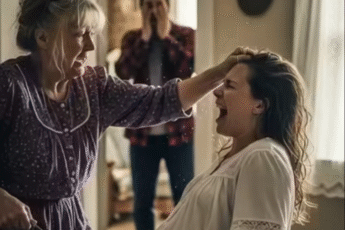
Hot, thick liquid cascaded over my head.
The pain was immediate and blinding. It wasn’t just warm; it was scalding. The gravy burned everywhere it touched—my scalp, my eyelids, running in rivets down my neck and soaking into the collar of my maternity sweater. I screamed, a sound torn from the deepest part of my chest, and stumbled backward, blinded by the salty, burning sludge.
My feet tangled together. The world tilted sideways.
Then, I was falling.
My shoulder hit the first stair of the sunken living room. My hips struck the second. But it was the third step where everything went wrong. The sharp wooden edge caught my pregnant stomach with brutal precision.
Something inside me shifted, then gave way with a sickening feeling I can only describe as tearing fabric.
I landed in a crumpled heap at the bottom of the three stairs. A beat of silence followed, and then, warmth spread between my legs, soaking through my maternity jeans. But it wasn’t just fluid. It was too much, too fast. It mixed with the gravy on the floor, swirling into something darker.
Blood. Bright, red, arterial blood.
It pooled beneath me, staining the pristine white rug Mom loved more than she loved me.
Laughter continued to echo from the living room. Someone clapped. Red Dress called out, “Karma is hilarious, isn’t it?”
My sister’s friends were treating my agony like dinner theater.
“She’s so dramatic,” Mom’s voice drifted from somewhere above me. I couldn’t see her through the haze of pain and gravy in my eyes, but I recognized that tone. It was the same one she used when I cried about being excluded from Alexis’s birthday parties as a kid.
“Finally, some actual entertainment,” Alexis added.
More laughter. A flash went off near my face—someone was taking a picture.
The baby wasn’t moving. My daughter, the little girl I’d already named Hannah, had gone completely, terrifyingly still.
Panic clawed at my chest, worse than the burning pain radiating from my stomach. I tried to call for help, but only a whimper escaped my lips. I was drowning in pain, humiliation, and the terrifying certainty that I was losing my child on my mother’s floor while she watched and critiqued my performance.
The front door opened.
Footsteps crossed the threshold—heavy, booted, and purposeful. They sounded different from the clicking heels and soft-soled dress shoes scattered throughout the house.
“What in God’s name is happening here?”
My father’s voice boomed through the entryway, vibrating in the floorboards against my cheek. The laughter stopped instantly, as if someone had sucked all the oxygen out of the room.
His work boots appeared in my blurred line of vision, scuffed with drywall dust and mud. He must have come straight from the construction site.
“Thomas, we’re having a party,” Mom started, her tone shifting instantly to something sweeter, more placating. “Your daughter just had a little accident. She slipped.”
“A little accident?”
Dad dropped to his knees beside me. His large, calloused hands moved to my face, gently wiping away the cooling, sticky gravy. His jaw was clenched so tight I could see the muscle jumping beneath his graying stubble. He looked at the floor, at the mixture of amniotic fluid and blood spreading rapidly around my legs.
“She’s bleeding. Catherine, there is blood everywhere!” Dad roared. He looked up at the room of frozen partygoers. “Someone call an ambulance! Right now!”
Nobody moved. They stood like mannequins, wine glasses suspended halfway to their mouths. Alexis had gone pale, her earlier bravado evaporating under the sheer force of Dad’s terror.
“I said, call an damn ambulance!” Dad’s scream made Red Dress jump, and she fumbled for her phone, nearly dropping it in her haste.
Dad looked up at Mom, who stood on the top step. Her expression carried more annoyance than concern, as if I had spilled red wine on her carpet rather than potentially lost my baby.
“Catherine, get down here and help your daughter.”
“Thomas, you’re overreacting,” Mom said, smoothing her skirt. “You know how clumsy she’s always been. She probably just tripped over her own feet trying to get attention.”
“Clumsy?” Dad’s voice went dangerously quiet. He stood up to his full height, towering over Mom, making her take an involuntary step back. “Our daughter is lying in a pool of her own blood. Her water broke. That means the baby is coming, Catherine. That means she needs a hospital, not your dismissal.”
I tried to speak, to tell him about the gravy, about Alexis’s attack, but another wave of pain crashed through me. My abdomen contracted violently—not a rhythmic labor pain, but a continuous, tearing agony.
“You did this,” Dad turned to Alexis. His finger pointed at her like a loaded weapon. “You poured that gravy on her. I can smell it. I can see the burn marks on her neck.”
Alexis opened her mouth, then closed it again. Her friends had started edging toward the door, clearly hoping to escape before the reality of the situation set in. Blonde Extensions actually made it to the foyer before Dad’s next words stopped everyone cold.
“Nobody leaves.”
His voice was low, guttural. “You are all witnesses to an assault. Assault on a pregnant woman. That is a felony in this state. If one person walks out that door before the police arrive, I will personally hunt you down.”
The color drained from Alexis’s face completely. “Dad… I didn’t mean… You didn’t mean to burn your sister with hot liquid?”
Dad’s laugh was a harsh, barking sound void of humor. “You didn’t mean to cause her to fall down stairs while eight months pregnant? What exactly did you mean, Alexis?”
Sirens wailed in the distance, growing louder with every heartbeat.
Dad knelt beside me again, taking my sticky hand in his. “Hannah is going to be okay. You are both going to be okay. I’ve got you now.”
I wanted to believe him. But the blood kept spreading, and my daughter still wasn’t moving, and the darkness was creeping in from the edges of my vision.
The emergency room was a blur of bright lights, shouting voices, and the smell of antiseptic masking the scent of gravy that still clung to my hair.
“Fetal heart rate is bradycardic!” someone shouted. “We’re losing tones!”
“Get the OB! We need an OR now!”
I felt hands pulling my clothes off, cutting through my jeans. A mask was shoved over my face.
“Placental abruption,” a doctor said, his voice tight. “She’s hemorrhaging. We have to get the baby out immediately.”
I tried to turn my head to find my father. He was pressed against the glass doors of the trauma bay, his hands raised, pressed flat against the window as if he could hold me to this earth by sheer force of will.
“Dad…” I whispered, but the anesthesia was already pulling me under. The last thing I saw was his face, wet with tears, before the blackness swallowed me whole.
I woke up to the rhythmic beeping of machinery and a pain in my abdomen that felt like I had been cut in half. Which, I realized with a groggy jolt, I had been.
A nurse appeared instantly at my side. “It’s okay, honey. You’re in recovery.”
” Hannah?” My voice was a croak. “My baby?”
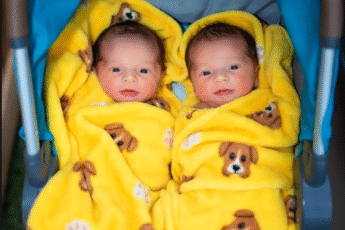
The nurse’s smile was gentle but guarded. “Your daughter is in the NICU. She’s breathing, but she’s very small. 4 pounds, 6 ounces. She’s a fighter, though.”
Relief hit me so hard I started sobbing, which only made the incision hurt more. Hannah was alive.
Dad walked in an hour later. He looked like he had aged ten years in a single night. His eyes were red-rimmed, his shirt rumpled and stained with my blood. But when he saw me awake, his whole face transformed.
“She’s beautiful,” he said, his voice cracking as he pulled a chair close to the bed. “She has your nose. And she is mad as hell about being evicted early.”
I managed a weak laugh. “Where… where is Mom?”
Dad’s expression hardened into granite. “At the police station. Along with your sister.”
He explained everything while I lay there processing the impossible. The police had arrived at the house shortly after the ambulance left. They had interviewed the witnesses. Red Dress, apparently overcome with fear of being an accessory, had provided a detailed statement and even handed over a video she’d taken on her phone.
“They arrested Alexis on the spot,” Dad said, gripping my hand. “Assault and battery, reckless endangerment of a child. The District Attorney is already talking about upgraded charges since the attack resulted in premature birth.”
“And Mom?”
“She tried to convince the police it was an accident,” Dad said, disgust dripping from every word. “She kept insisting you slipped. She even started trying to clean up the blood before they got there to ‘save the rug.’ They charged her with obstruction of justice and tampering with evidence.”
My own mother. She had cared more about her rug and her golden child’s reputation than my life.
“I filed for divorce this morning,” Dad added quietly.
I squeezed his hand. “Dad, you don’t have to—”
“I’m not doing it for you,” he interrupted firmly. “I’m doing it because I finally see what I’ve been ignoring for thirty years. Your mother has always favored Alexis. She has always made excuses for her cruelty while holding you to impossible standards. I enabled that by staying silent. I won’t be silent anymore.”
The legal battle that followed was brutal, a media circus that consumed our small town.
Alexis’s bail was set at $50,000. Mom scraped the money together by mortgaging the house—a move Dad only found out about later, which cemented his resolve to leave her.
The trial took place six months later. By then, Hannah was out of the NICU, a tiny but fierce bundle of energy who required oxygen at night and constant monitoring. Jake had returned from deployment on emergency leave, and his presence was the steel spine I needed to face my family in court.
The defense attorney was a slimy man who tried to paint me as an attention-seeking drama queen who crashed a private party.
“Isn’t it true,” he asked me on the stand, “that you have a history of jealousy regarding your sister?”
“I have a history of being abused by her,” I replied, my voice steady.
But the turning point came when Mom took the stand for the defense. She sat there in a navy suit, looking like the grieving matriarch. She lied with an ease that was terrifying. She claimed I had tripped. She claimed Alexis had reached out to catch me.
Then, the prosecutor, a sharp-witted woman named Diana Wright, played the video.
The courtroom fell into a stunned silence. On the large screens, everyone watched Alexis grab the gravy boat. They heard the distinct sound of the liquid hitting me. They heard my scream. They heard the thud-thud-crack of my body hitting the stairs.
And then, crystal clear through the speakers, came Mom’s voice: “She’s so dramatic.”
And Alexis: “Finally, some entertainment.”
I saw the jury members’ faces. Disgust. Horror. One juror, a grandmotherly woman in the front row, actually covered her mouth with her hand.
Mom turned pale on the stand. There was no spinning this. The cruelty was naked, recorded, and undeniable.
The verdict came back in three hours.
Guilty on all counts.
The judge sentenced Alexis to four years in state prison. Mom received a suspended sentence for obstruction but was ordered to complete 500 hours of community service and pay a massive fine.
As the bailiff led Alexis away in handcuffs, she screamed at me. “This is your fault! You ruin everything!”
Dad put his arm around me, shielding me from her view. “It’s over,” he whispered. “She can’t hurt you anymore.”
Recovery wasn’t a straight line. It was a jagged path filled with nightmares where I was always falling, always burning.
I developed PTSD. The grocery store became a battlefield; loud noises made me duck for cover. I couldn’t be around gravy or the smell of roasted turkey without gagging.
Mom tried to contact me from Ohio, where she moved immediately after the trial to be closer to the prison where Alexis was held. She sent letters blaming me for “destroying the family.” She left voicemails crying about how hard prison was for Alexis, never once asking about the grandchild who had almost died.
One Saturday morning, three years later, a car pulled up to my house.
It was Mom. She stood on the porch, looking older, thinner, her face etched with bitterness.
“I’m leaving,” she said when I opened the door, keeping the chain lock engaged. “I’m moving to Ohio permanently. I just… I wanted to see my granddaughter once.”
Hannah was playing in the living room with the rocking horse Dad had built for her.
“No,” I said.
Mom flinched. “She’s my blood.”
“You watched me bleed out on your floor and called it entertainment,” I said, my voice shaking but resolute. “You chose your daughter. I’m choosing mine. You are a stranger to us, Catherine. And strangers don’t get to see my child.”
“I loved you both equally!” she cried, the tears finally flowing.
“No, you didn’t,” I said, realizing the truth of it for the first time without pain. “You loved her more. You always have. And that’s fine. But you don’t get to keep me as a backup plan.”
I closed the door. I watched through the peephole as she stood there for a long time, then turned and walked back to her car. As she drove away, I felt lighter than I had in years.
Life moved on, as it always does.
Dad became the center of our world. He retired and started a woodworking business, teaching Hannah how to sand and paint. He was the grandfather I had always wished he’d been as a father—present, patient, and adoring.
Jake and I had another baby, a boy named Thomas, after my dad.
We built a family based on choice, not obligation. Jake’s parents adopted me as their own, filling the void my mother left with warmth and cookies and unconditional love.
I still have scars. A faint white line on my abdomen. Burn scars on my neck that flush red when I’m angry or hot. But they are evidence of survival, not defeat.
Last week, I visited Dad’s grave. He passed away peacefully in his sleep, ten years after the incident. I brought sunflowers, his favorite.
“We’re okay, Dad,” I told the stone. “Hannah is starting high school. Thomas is playing baseball. We’re happy.”
My sister tried to destroy me. My mother tried to erase me. But instead, they freed me. They showed me exactly who they were, and in doing so, they gave me the permission I needed to let them go.
Sometimes, the greatest gift your enemies can give you is the truth. I fell down those stairs a victim, but I stood up a survivor. And the life I built from the ashes of that day—the love, the laughter, the safety—is the best revenge I could have ever asked for.
If you want more stories like this, or if you’d like to share your thoughts about what you would have done in my situation, I’d love to hear from you. Your perspective helps these stories reach more people, so don’t be shy about commenting or sharing